


The Contrarians catchup
The guys waste no time picking up where they left off last week: Anika Wells and her expensive (taxpayer-funded) travel habits.
Adam’s latest quiz covers the world’s most valuable brands: (spoilers) Apple, Microsoft, Google, Amazon. Adir vehemently disagrees with Facebook being ranked higher than Nike when you ask “what percentage of the motivation for using the product is driven by the brand of the product?”
Adir on measuring net promoter score: “The thing about NPS is that it is attitudinal loyalty. It is not predictive of repurchasing, which is behavioural loyalty.”
Adir does a mini deep-dive into Maggie Beer’s Hampers. The ASX-listed company that carries her name, and of which she is still a director and a shareholder, has fallen on hard times.
Adam gives a shout out to the amazing male teachers out there who are important role models for young men. Adir asks if he were to start a school where the best teachers in the world were paid $500K each, whether you could get 500 parents to pay $500K per year.
Adir discusses Melbourne-founded Operoo, a school automation platform that was acquired by SchoolStatus.

The divorce of King & Wood Mallesons
King & Wood Mallesons’ 14-year Australia–China merger is ending after partners overwhelmingly backed a split, citing cultural misalignment, strategic drift and changing capital flows. The firm will separate into China-focused King & Wood and Australia-based Mallesons, leaving many Australian partners relieved and upbeat.
Adir: “Lawyers are not the value creators of capitalism. And so frankly, they should not be earning $20M a year. The big returns should come to the value creators of the economy. Because the only way you can get people to take risk is to make returns commensurate with that risk. And there is no risk in being a lawyer.”
Adam: “Just how stupid it was to ignore the cultural differences between an Australian firm and a Chinese firm is just insane. And for Mallesons, from being the the best firm at the time to do it. Just what an error.”
Interest rates to the moon
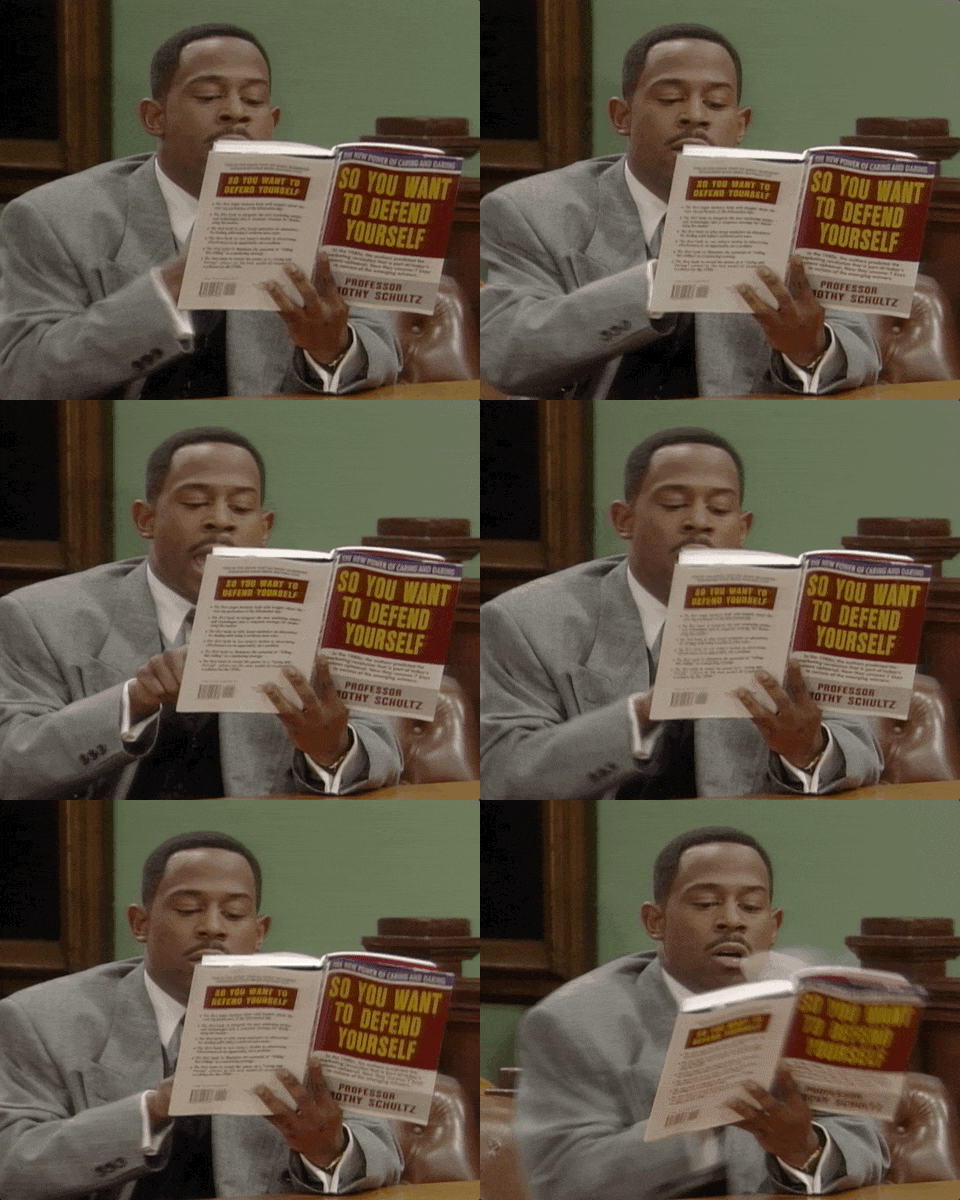
Rising bond yields driven by inflation and the end of the RBA easing cycle are set to lift federal interest costs by an estimated $7.5B over four years, complicating Jim Chalmers’ mid-year budget update and intensifying pressure to rein in debt and spending.
Most economists believe Australia’s rate-cutting cycle is finished as inflation re-emerges and supply lags demand. Critics argue the RBA eased too early, raising the risk of renewed hikes in 2026, though defenders note cuts followed a sharp inflation fall and balanced inflation control with employment.
Adir: “The challenge is we might be able to sustain all of this spending growth if we were getting more efficient in producing output. But we’re not. I think this is why we see the rise of extremist parties, because an extremist party comes out and says, stop spending money on all this rubbish and letting people immigrate and take all our money. And you might say that’s extreme, but that’s that’s resonating with people who are scared and get poorer.”
Deep dive: Corporate Travel Management
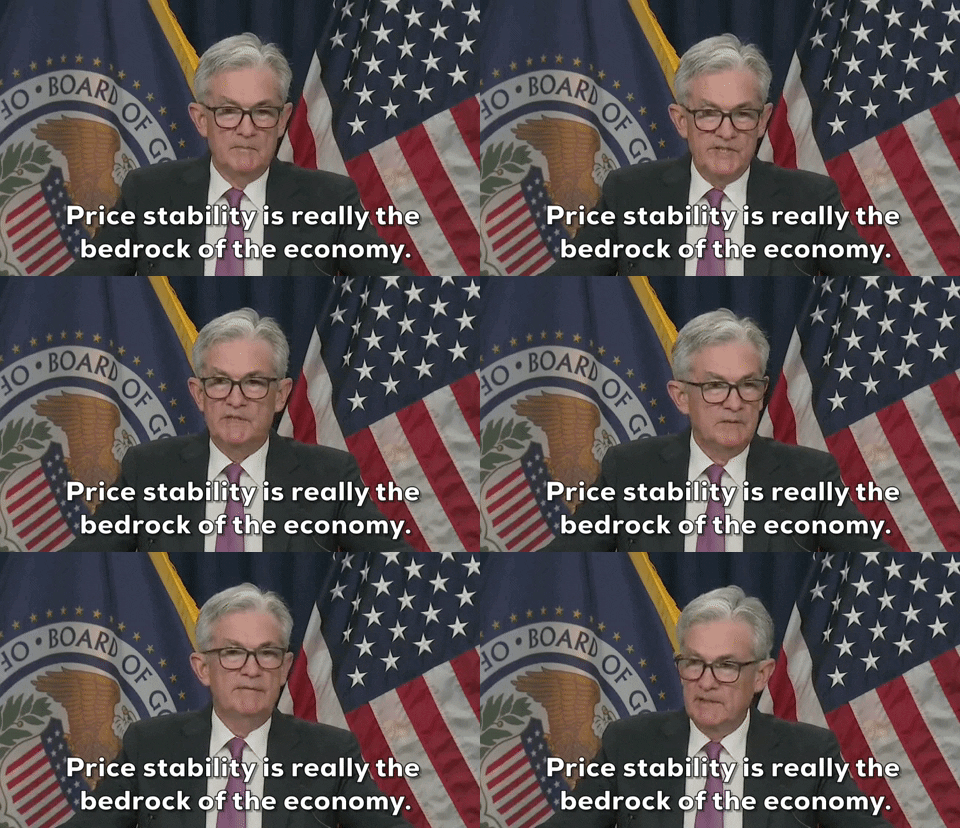
A secret government audit warns travel management companies can overcharge clients through hidden commissions and airfare mark-ups. The findings surface as Corporate Travel Management faces massive UK refunds. Auditors detailed opaque supplier contracts, incentives to upsell, and past eight-figure settlements, raising broader concerns about industry transparency.
Listen in for a deep dive into Corporate Travel Management and all their woes.
Adam: “Let’s look at this business with first principles. The business wasn’t making money in the last three years. When you factor in refunds, it’s probably breakeven to loss, making it maybe slightly profit on a good year. So if you had a business that’s turning over its money and probably getting worse because earnings have dropped off, what would you do? Forget all the stuff happening in the background. What would you value this business in good times. And we’re in really bad times right now.”
Adir: “We can say many negative things about where this business finds itself and how it found itself here. But fundamentally, I don’t think the founder has shown a lack of conviction in his own business.”
Five other stories worth following:
Trump’s AI executive order limiting state regulation has drawn bipartisan criticism, exposing unusual alliances. Supporters want a single national framework; opponents cite states’ rights, consumer protection, and job risks, signalling messy legal fights ahead.
Time named the “Architects of AI” its 2025 Person of the Year, honouring figures like Musk, Zuckerberg, Altman and Huang, recognising AI’s outsized influence on global news, power, and economic direction for better worse.
AI-linked stocks slid as Broadcom’s earnings and reports of Oracle delaying OpenAI data centres dented sentiment. Despite denials and Nvidia production rumours, losses spread across data centres, big tech, and AI bets globally.
Markets give Avatar: Fire and Ash little chance of topping Wicked: For Good’s $150M opening, assigning 98% odds against it, though James Cameron’s history suggests underestimating him has often proven risky before release.
AI adoption is far higher in knowledge jobs than blue-collar roles, with tech and finance leading usage. Gallup shows overall workplace use surging year-on-year, especially among senior employees, though daily use remains limited still.
Did you see a UK politician questioning a £1.5 billion contract awarded to CTD’s UK sub re housing illegal migrants on a barge off the coast of Dorset?
This thing may never trade again.
https://x.com/RupertLowe10/status/2016088441642012752