


The Contrarians catchup
Adir was recognised by two stylish strangers while sitting in traffic - they knocked on his car window and held up the podcast on their phones. “I was very flushed. My car is very old. Like I do not drive an expensive car. And so they’re looking in and anyway, it was very... Thank you for listening to the two stylish gentlemen.”
Adam reflected on watching cable TV in Canada with only 40 channels (10 of which were watchable). “William would watch Scooby-Doo, something he’d look forward to, ‘cause it was on at eight thirty and it wasn’t on at seven like everything else on demand. It really shows the value of scarcity and how scarce products make you like them more.”
Adam recounted a nightmare experience with Air Canada - his nephew was nearly bumped from a flight before a crucial exam, and Adam and his son were separated into different seats with no explanation. “They just lied to me about the nomination. So obviously somebody must have complained and wanted row one or whatever.”
Adir ran a LinkedIn poll on political cartoons after Adam dismissed them on a previous episode. Result: 34% are indifferent, 34% generally enjoy them, 23% don’t want them, and only 8% love them. Adir: “Forty-two percent of people get some enjoyment out of them. I think that’s way more than you could say about most individual journalists. So I think on balance, they’re actually a pretty good thing to have in a newspaper.”
The cybersecurity arms race begins
Anthropic quietly released a new model called Mythos to around 30-50 large organisations including JPMorgan, claiming it can find zero-day vulnerabilities in software by reverse-engineering source code from compiled binaries. Adir argued this signals a fundamental shift: cybersecurity, not productivity or creativity, will be the defining AI battleground of the next five years.
Adir: “The single biggest thematic of the next five years is going to be security. Much more than anything else that AI is doing.”
Adir: “The claim of Mythos is this. It will go and grab your source, for example, from your installation of Windows, and it can reverse engineer source code based on this extremely simplified binary, and then it will go and look for exploits inside that regenerated, like a reverse engineered source code, and it says it can find zero day.”
Adir: “The real scary thing about this is if it goes and finds a networking vulnerability inside a Microsoft’s networking part of the software, it will go and create this exploit and then it can go all the way to your domain controller server that runs your whole network. And that is like the greatest cyber attack. That’s what they all want to do.”
Adam: “I feel like quantum computing is the bigger risk than AI.”
The Iran conflict: Strait opens, oil tumbles
Iran’s Foreign Minister announced the Strait of Hormuz would reopen, with oil dropping 10% on Friday to around $87 a barrel, barely above pre-conflict levels. Trump declared a “great and brilliant day for the world coming.” Adam and Adir assessed the state of the conflict.
Adir: “Iran were just more willing to kill innocent people. And if the US is willing to, the US or Israel or anybody could have also blocked the Strait of Hormuz if they want. Iran has no advantage - the whole thing of Iran mining the strait is complete bullshit because the Iranian ships are getting through.”
Adir: “I think it’s turned out to be a lot less bad than people had feared. Like it is damaging the economy globally, but it’s not destroying the economy. A globalised world means that there is more capacity to adjust for these shocks over time.”
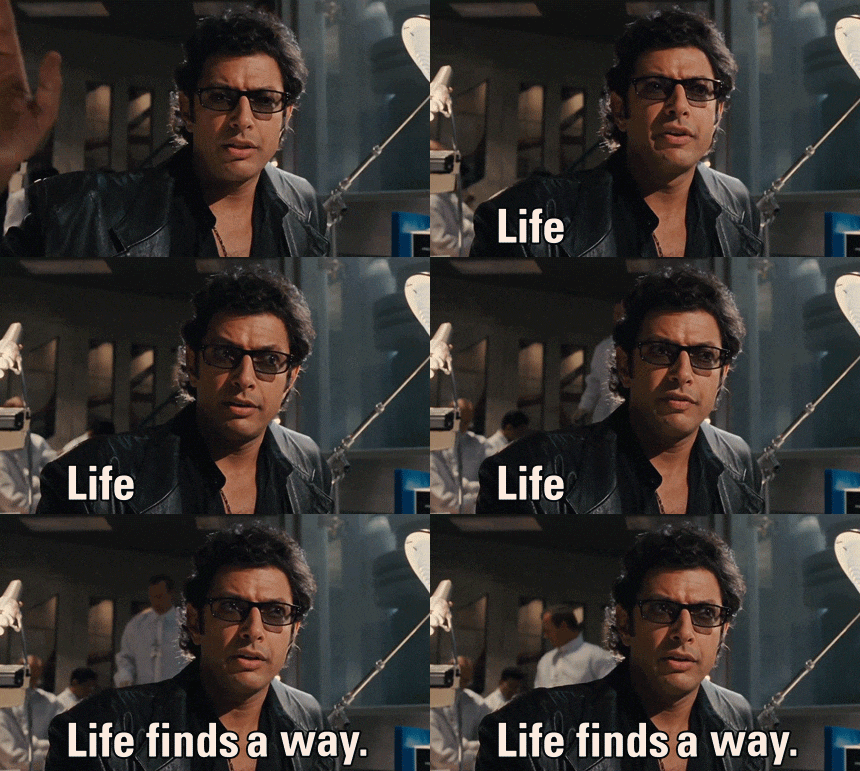
Adam: “Do you remember in Jurassic Park, Jeff Goldblum has this immortal line - he said life finds a way. And in this case, life finds a way. Like we build pipelines, we find other sources.”
Pope Leo vs Trump
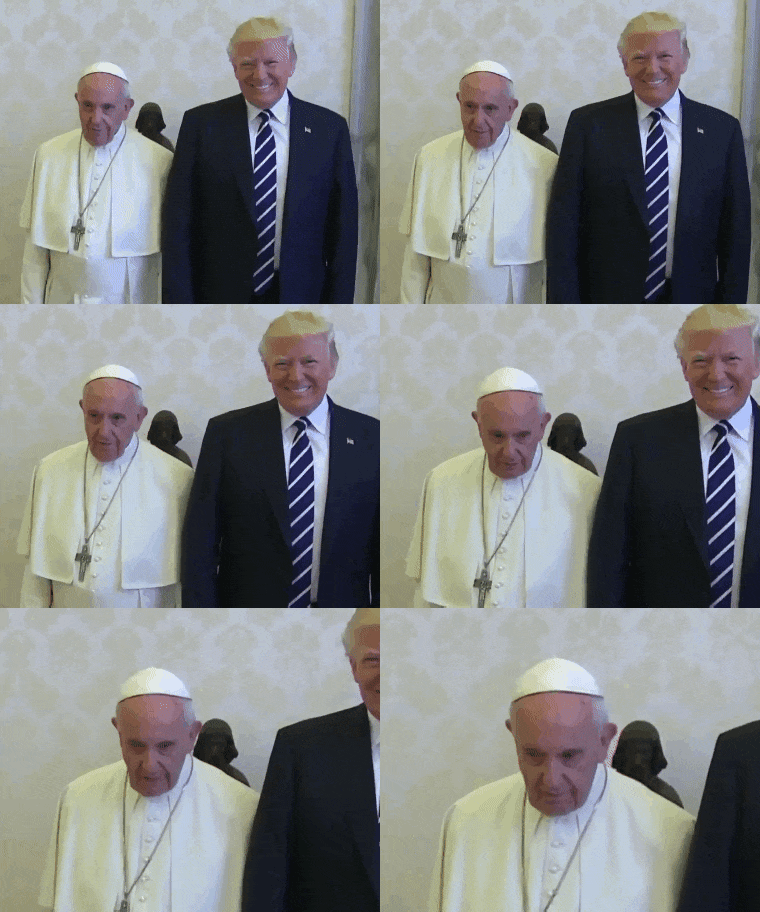
Pope Leo XIV (born Robert Prevost, from Chicago) entered a public feud with Donald Trump after the President told him to “stop cutting to the radical left and focus on being a great Pope, not a politician.” The Pope hit back, claiming the world is being “ravaged by a handful of tyrants.” Adam noted the Pope had been conspicuously silent on Iran’s human rights record.
Adam: “I’ve got no issue with the Pope criticising Trump, by all means criticize all he wants. But I’ve got a big issue with the Pope criticising the US and not saying a word on the 30,000 innocent protesters who were brutally murdered by the same regime.”
Adam: “Bill Maher had his great bit on it last week when he said a week ago the left hated the Pope, he’s anti-abortion, he’s anti-gay rights. Suddenly they love the Pope - he’s turned around in the space of two days. Suddenly the Pope’s great. Forget about this abortion stuff. He doesn’t like Trump, so he’s good.”
Special guest: Steve Baxter - founder, VC, defence investor
Steve Baxter is a legendary Australian tech founder - he grew SE Net, one of Australia’s first ISPs, sold it during the dot-com boom, co-founded Pipe Networks (sold to TPG for ~$400M), spent a year at Google, appeared on Shark Tank, and now runs Beaten Zone Venture Partners, an early-stage defence fund.
On his time at Google: “It was a very, very entitled workforce. You’d have like no meetings Fridays because people wanted to work from home, and then you’d ring them and they’re getting their car fixed or they’re down the park lane with the kids. I should have just sort of taken my brain out of my head, put it on the table and enjoyed the ride. But I just couldn’t. I don’t like not providing value.”
On the data centre boom: “When I was at Google, they were doing 90 megawatt floor plates when I was there in 2008-2009. Which is massive. Maybe an Australian data hall wouldn’t be 90 megawatts even now. Very, very big data halls.”
On what’s needed to power them: “They’re talking ten cents Australian if you look at the price - you can burn this in an automotive plant as well, and you’ll only cost you 10% more less in efficiency.”
On Beaten Zone Venture Partners and defence investing:
Steve: “People have the perception that if we don’t participate in defence, then obviously we’re kind. But you’re just weak. You’re not strong. And there’s nothing good about being weak.”
Adir: “People like to think we can talk our way through everything and be gentle and don’t realise, if there are bad people with weapons trying to hurt us, then we need good people with better weapons and training stopping that happening.”
On Australia’s defence readiness:
Steve: “We’re not spending enough. And I think actually using an accounting shift to actually pretend we’re now spending two point eight percent of defence is ridiculous, including the military pensions. The US doesn’t.”
On Ukraine’s Brave One Marketplace, an eBay-style platform where soldiers in the field can buy and rate weapons, with points awarded for destroying enemy equipment:
Steve: “This iteration curve, this innovation cycle, has now gone from in our society here, it’s gone from decades to years. They do it in weeks and days. They ran a test around incentives and outcomes and they changed the points for a Russian KIA, a soldier killed in action, from two points to six and in one week they doubled KIAs. That’s unbelievable.”
Adir: “Some people will listen to this and they’ll think it’s terrible that you’re gamifying killing people. My response to that would be, these people, whether they want to be on the battlefield or not, they’re trying to kill the Ukrainians. And unfortunately this is what war is about.”

Luxury brands: peak fake rich?
Hermès secondary market prices for Birkin and Kelly bags have compressed - bags that once sold at double retail on the resale market are now trading close to retail price. LVMH and Kering shares have been smashed, Ferrari is down slightly.
Adam: “People look at software businesses and say this is the greatest thing - no cost of goods, amazing margins. You can’t beat the margins of luxury brands. You cannot beat those margins.”
Adir: “So you’ve seen the secondary prices collapse to be not that much higher than the price, which means there’s much less demand for Birkins and Kellys now. Do you think we’ve passed peak fake rich credit card purchased insta luxury?”
Adam: “We want someone like Elon Musk who’s a creator being the richest person in the world. Forget the fact that Tesla’s grossly overvalued and whatever. But Elon being the richest person in the world is a much better signal of humanity than Bernard Arnault being the richest person.”

Five other stories worth following:
A San Francisco startup showed its AI helps robots perform unfamiliar tasks like using an air fryer by combining prior knowledge with instructions, moving closer to general-purpose robot intelligence guided by simple language commands.
SaySo, a new short-form news app, is launching in the US and Canada, allowing only vetted creators to post, requiring sources verified by human and AI moderators, with UK expansion planned.
QVC Group will file for Chapter 11 as shoppers shift to livestream commerce and discount platforms, with its stock collapsing from over $900 a decade ago to under $3 last week.
A US tariff refund portal called CAPE launches, letting businesses reclaim certain duties, though claims may take months or years, with some firms buying claims as alternative assets from those unwilling to file.
Trump signed an executive order accelerating psychedelic drug research, including LSD and ibogaine, with Joe Rogan influencing the push, despite ibogaine remaining illegal and some Americans seeking treatments abroad in Mexico.