



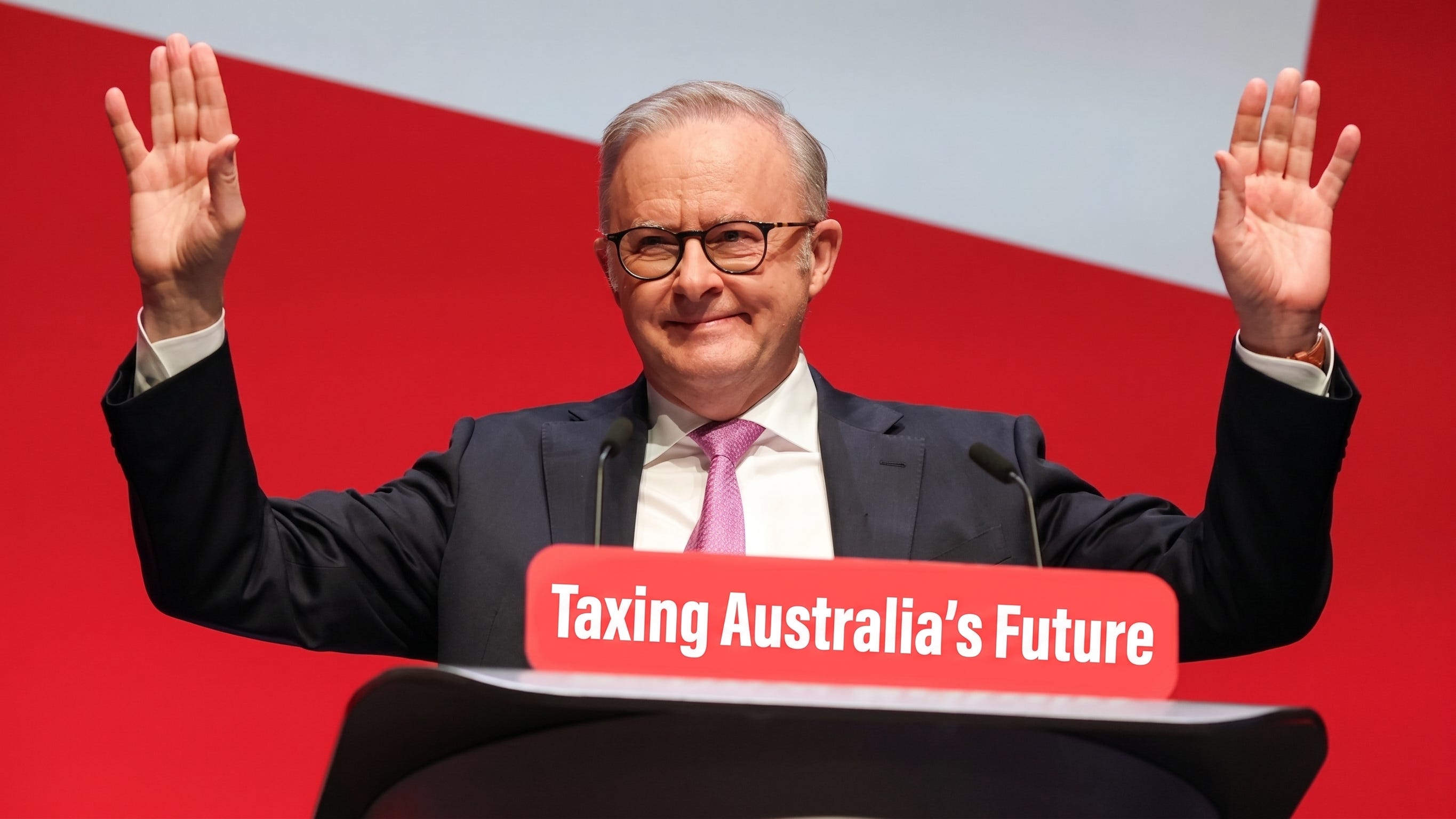
It seems the official ideology of this Federal Labor government is now that a sweating business founder should lose half of their wealth in tax, whilst the rich investor in the same business should pay none.
Lest you think I’m just on a hyperbolic rant, I want to be clear that I’ve just accurately described the current system of taxation introduced by this Australian government.
To provide a brief insight into the detail, the problem arises because the founder of a company owns shares that didn’t cost them money, instead costing them sweat, pain, hours of labour, and a commitment to building a business against the odds. None of this has a dollar value, and when it comes time to sell, the full value of their sale price is considered a “capital gain” and they will be taxed on that full value.
In contrast, the rich investor who put money in has a cost base. When they sell and are taxed, the gain is simply the difference between their entry and exit price. This is normal, and it’s how the system has worked for decades and works in most developed countries around the world.
It’s when the new business is a tech startup that the government’s new system creates a societally indefensible outcome. The founders just had their tax rate double, whilst the investor in this same company has ways to avoid paying any tax at all.
How does the investor legally manage to keep all of their profits? If they invest directly in the right type of very early business, they can use the early stage innovation company (ESIC) structure. If they prefer to invest via professional venture capital funds, those funds usually operate much of their funding under an early stage venture capital limited partnership (ESVCLP).
Either way, beyond the frankly terrible acronyms, both of these structures are magical for the investor. In most cases, the investor pays exactly zero capital gains tax on any profits they make when their shares are sold.
So, a person with enough spare money to invest elsewhere pays a tax rate of zero on potentially millions of dollars in profits, while the typically much poorer founder, who worked 80 hours a week for years at a below-market salary, will now lose almost half of their sale proceeds to the ATO.
This isn’t a new revelation, and the perversity will be well known to some readers. But has no one powerful in this government, or amongst their ideological comrades, or in the bureaucracy, stopped to consider the societal and ethical implications of this tax?
Not only is the structure misaligned in an economic sense and likely to damage jobs and wealth growth in Australia, it is also the legal formalisation of a model where a huge gap now exists for the rich to get richer while regular Australians have reduced opportunities for wealth creation. And it has severely reduced the chance for regular Aussies to break into the wealthy class by starting and building their own business.
Whilst it’s true that a differential tax model pre-dates these tax changes, the Treasurer’s destructive budget has simply exacerbated the difference further. It is truly shocking that these changes have come from a factionally Left Labor government with the almost Orwellian claim of a focus on generational equality. Young people are far more likely to be the founders of businesses than their investors, and so the preferential tax treatment is skewed towards older (and probably male) Australians.
None of this is to suggest it is wrong to use tax incentives to stimulate investment in growth assets. Whilst I might argue that the focus should be narrowed to businesses driving export income, and the tax benefits should come with a clearer and more precise cap, the philosophy is a sound one.
What is not sound is to treat the very people taking the risk so punitively. This is ideologically despicable. Next time the Treasurer stands in front of a room of business builders, he should either explain why the system is fair or hide his face in embarrassment. Or, better still, fix it!
I expect one rebuttal will reference the government’s new proposed tax carve-outs for tech founders. However, this mess simply emphasises the depth of the chaos that has been created. The carve-outs are narrow, they are imprecise, they are incomplete, they are unclear, and they are likely to impose a significant compliance burden on founders. They represent no safe path through this ideological quagmire.
The Albanese government seems to take Australia’s prosperity for granted. There is a belief that money can be freely spent with endless abandon, and then recouped via debt, or simply lifting taxes on repeat.
Unfortunately, taxing the very people driving the future job creation and prosperity of Australia will eventually prove a folly. But by then it will be too late.
It is time for Jim Chalmers to reconsider how this taxation approach aligns with his party’s fundamental ethics and ideology. Clearer minds must stop Labor drifting so far from its roots.
They must rally internally against the injustice of punitively taxing half the profits of those who do the work, whilst completely exempting those who deploy the capital.